San Bao Pty Ltd v Minister for Immigration and Citizenship [2026] HCA 6
The facts
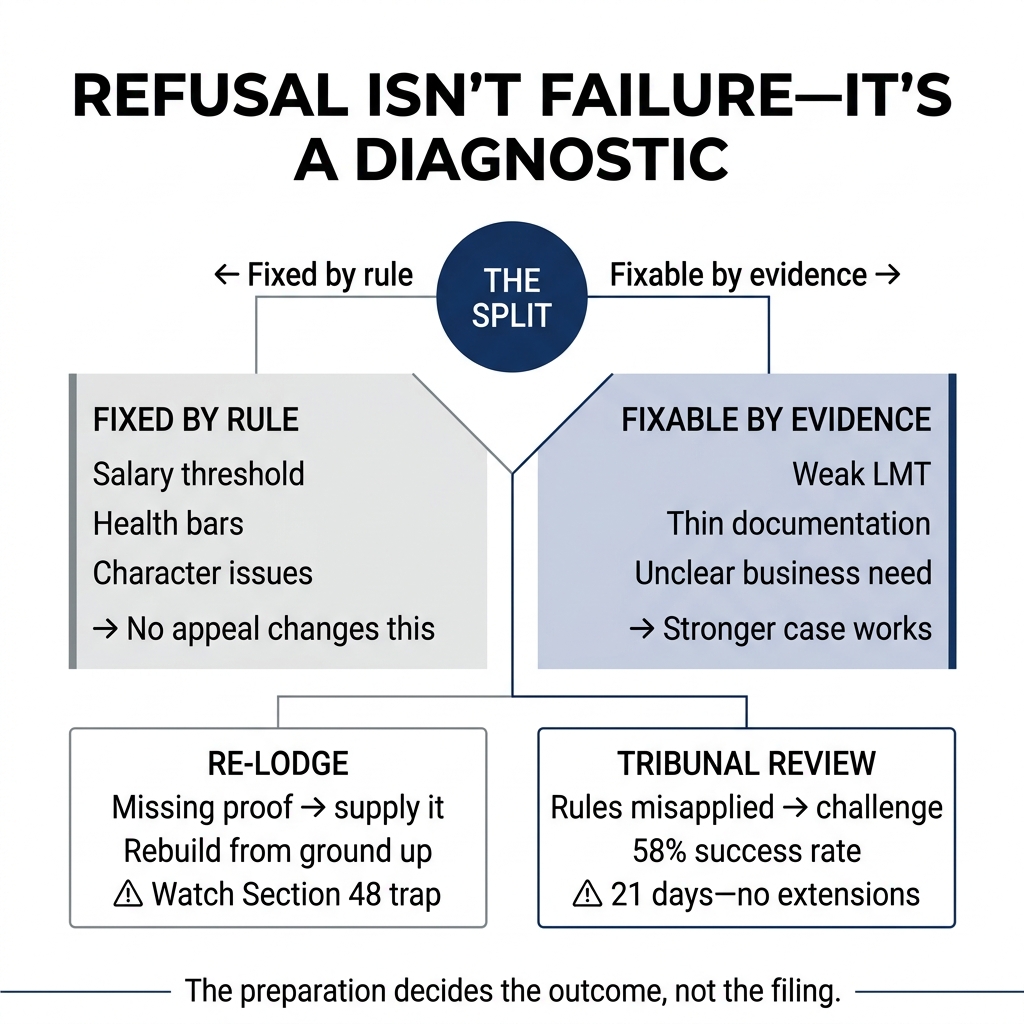
San Bao Pty Ltd ran a restaurant in Sydney. It had been approved as a standard business sponsor, but its nomination application for a proposed skilled worker was refused because the delegate was not satisfied that the nominated position was a genuine position under the Migration Regulations. Instead of seeking merits review at the Administrative Review Tribunal within the statutory time limit, the company went straight to the High Court's original jurisdiction seeking constitutional relief.
The legal question
Could a nomination refusal be challenged directly in the High Court's original jurisdiction once the window for ordinary tribunal review had closed? The company argued the delegate had wrongly assumed no organisational chart had been provided, and that this mistake amounted to a constructive failure to exercise jurisdiction and legal unreasonableness.
What the Court held
The High Court dismissed the application, on two footings:
- The High Court's original jurisdiction is not a substitute for the ordinary review process, and the mere fact that a party has lost its usual review rights, including by missing a time limit, does not make the case exceptional. Panacea Lawyers
- On the merits, the Court found the delegate had not misunderstood the evidence; instead, the delegate's reasons showed concern that the material provided was insufficient to demonstrate how the nominated role fitted within the business and why the position was genuinely required, the problem was not the absence of documents, but the lack of persuasive evidence showing the genuineness of the nominated position.
The Court read the delegate's reasons "fairly and in context," rather than seizing on an ambiguous phrase to manufacture jurisdictional error.
Why this matters for structuring genuine need submissions
The case is really a cautionary tale about evidentiary sufficiency, not just documentation. Two lessons follow directly:
- Procedural discipline is unforgiving. Missing the tribunal review deadline is effectively fatal, the High Court will not act as a backdoor merits review avenue. This makes getting the nomination submission right the first time (or timely review) far more important than hoping for a later constitutional remedy.
- "Genuine need" is a persuasion exercise, not a checklist. The refusal didn't turn on a missing document, it turned on the quality and coherence of the evidence. A well-structured genuine need submission needs to affirmatively show, in a connected narrative:
- Business structure and context, an organisational chart or equivalent showing where the role sits, reporting lines, and how it relates to existing staff.
- Operational necessity, why the business actually needs this specific role now (workload, growth, gaps in existing skills), not just a generic statement that the position exists. Fit between duties and occupation, the day-to-day tasks must map convincingly onto the nominated occupation's ANZSCO description.
- Financial and commercial capacity, evidence the business can sustain the position (turnover, staffing costs, trading history) so the role reads as commercially real rather than manufactured to secure a visa.
- Internal consistency, figures and descriptions across the nomination form, supporting letters, and financial documents need to align; the delegate's suspicion often arises from documents that don't corroborate each other.
The broader point San Bao illustrates is that decision-makers scrutinise the sufficiency and persuasiveness of the whole evidentiary package, and courts will defer heavily to that assessment unless there's a clear legal error, an ambiguous or thin submission won't be rescued by later arguing the delegate "misunderstood" the evidence. Sponsors are best served by treating the genuine need submission as an advocacy document that tells a coherent commercial story, not a form-filling exercise, and by not banking on litigation as a safety net for a late review application.